How to Fix a Misspelled Name on a Deed
Last updated: October 14, 2026
A misspelled name on a recorded deed is fixed with a new quitclaim deed. The person who signed the first deed signs a new one with the name spelled correctly, in front of a notary, and it's recorded in the same county, where it sits on record beside the first. Here's an example of the mistake and the deed that fixes it.
An example: Kathryn spelled as "Katherine"
Robert Moore deeded his property to his daughter in 2023. Her name is Kathryn Ann Moore, but the deed spelled it "Katherine," and nobody noticed until the recorded copy came back from the county. Robert is alive and happy to sign again, so the fix is a new quitclaim deed from Robert to Kathryn with her name written correctly.
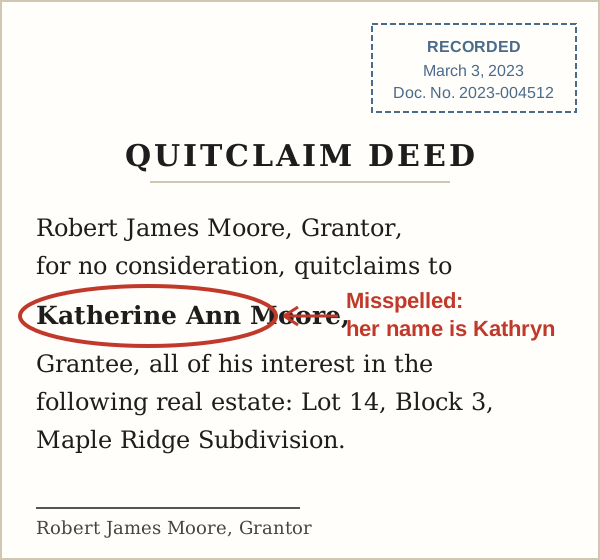
The recorded deed, with the mistake
Robert James Moore, Grantor, for no consideration, quitclaims to Katherine Ann Moore, Grantee, all of his interest in the following real estate:
Lot 14, Block 3, Maple Ridge Subdivision, as shown on the recorded plat.
Recorded March 3, 2023, as Document No. 2023-004512.
The new quitclaim deed that fixes it
Robert James Moore, Grantor, for no consideration, quitclaims to Kathryn Ann Moore, who appears in the earlier deed as Katherine Ann Moore, Grantee, all of his interest in the following real estate:
Lot 14, Block 3, Maple Ridge Subdivision, as shown on the recorded plat.
This deed is given only to correct the spelling of the Grantee's name in the deed recorded March 3, 2023, as Document No. 2023-004512. Nothing is paid for it.
What changes on the new quitclaim deed?
Only three things. Everything else is copied from the recorded deed, word for word.
- The name, spelled correctly. It's followed by the misspelled version, introduced with "who appears in the earlier deed as," so anyone reading the records can see that both deeds name the same person.
- A line saying what the deed fixes. It names the mistake and points to the earlier deed by its recording date and document number, or its book and page if your county uses those.
- A line saying nothing is paid. Several states' transfer tax exemptions for a deed fixing an earlier one apply only when nothing is paid.
The legal description stays exactly as it is on the recorded deed. Copy it from the recorded copy rather than from an older document, so the two deeds describe the land the same way.
What if the misspelled name is the grantor's?
The same fix works the other way around. If the person who signed the first deed had their own name misspelled, they sign a new quitclaim deed to the same grantee under their correct name, adding "who appears in the earlier deed as" and the misspelled version. They sign it the way they normally sign, in front of a notary.
Fixing a misspelled name, step by step
- Get a copy of the recorded deed from the recording office in the county where the property is located. You'll copy the legal description and the recording information from it.
- Prepare a new quitclaim deed from the same grantor to the same grantee, with the name spelled correctly and the two lines shown in the example.
- The grantor signs it in front of a notary, with witnesses if your state requires them.
- Fill in any transfer tax return your state requires, and claim its exemption for a deed fixing an earlier one if your state has one.
- Record the new quitclaim deed in the same county as the first.
🛟 Need a little extra help? Our Quitclaim Deed Help page lists state-specific quitclaim deed forms, a deed preparation service and online notarization.
Will the new deed cost transfer tax?
Not where your state exempts a deed that fixes an earlier one and no money changes hands. Pennsylvania, Delaware, New Hampshire and the District of Columbia are among the places with that exemption. Your state's guide covers its own transfer tax, if any, and the recording office charges its usual fee to record the deed.
Common Questions
Who signs the deed that fixes a misspelled name?
The grantor, the person who signed the first deed, signs the new quitclaim deed in front of a notary.
Can I just write my correct name on the recorded deed?
No. A recorded deed stays as it was recorded. The spelling is fixed with a new quitclaim deed, signed by the grantor and recorded in the same county.
What if the person who signed the first deed has died?
Then someone else signs the new quitclaim deed in their place, and state law decides who. Texas, for one, lets the grantor's heirs or successors sign.
Does the new deed change who owns the property?
No. It names the same grantee and the same land as the first deed and passes nothing new. It puts the correct spelling of the name on record.
Where These Rules Come From
This page covers every state, so the laws below are examples, alongside the government pages behind the general points. Each citation, such as D.C. Code § 47-902, works like a street address for the law: which code, then which section. You don't need any of them to follow the page; they're here so you can check the wording yourself. Every name below links to its official text in a new tab.
- Sacramento County Clerk/Recorder, Rules for Recorded Documents — California's rule that a document recorded again is signed and notarized again as a new document, apart from a few narrow exceptions.
- Dane County, Wisconsin, Register of Deeds: Change Married Name on Deed — a recording office showing a deed that gives a person's current name together with an earlier one ("now known as"), and a quitclaim deed used to update a name.
- Tex. Prop. Code § 5.029 — in Texas, a party's heirs, successors or assigns may sign a fix to an earlier deed in that party's place.
- Act 2 of 1971, the Tax Reform Code, § 1102-C.3(4) — Pennsylvania's exclusion for a transfer for no or nominal payment that corrects a recorded transfer.
- 30 Del. C. § 5401 — Delaware's exemption for a deed fixing an earlier one when nothing is paid.
- D.C. Code § 47-902(8) — the District of Columbia's exemption for transfers that, without additional payment, correct a recorded transfer.
- N.H. RSA 78-B:2, V — New Hampshire's exemption for a deed that corrects an earlier deed.
Rules on this page checked against the sources listed here on October 14, 2026.
A note on what this page is. This is general educational information, not legal advice, and reading it does not create an attorney-client relationship. Rules on fixing and re-recording deeds vary considerably by state and change over time. For advice about your specific situation, consult a qualified professional licensed in the state where the property is located.