I Changed My Name. Is My Deed Still Good?
Last updated: October 14, 2026
Yes. If you've married, divorced or changed your name for any other reason since your deed was signed, your deed is still correct. It shows the name you had when the property came to you, and you still own it, so you generally don't need to do anything. If the property is in your name alone and you'd like your current name on the record, a quitclaim deed from yourself to yourself puts it there.
An example: Mary Smith, now Mary Jones
Mary Smith received her property by deed in 2019. She married in 2024 and now goes by Mary Jones. Her recorded deed still says Mary Smith, and that isn't a mistake: Smith was her name on the day the deed was signed.
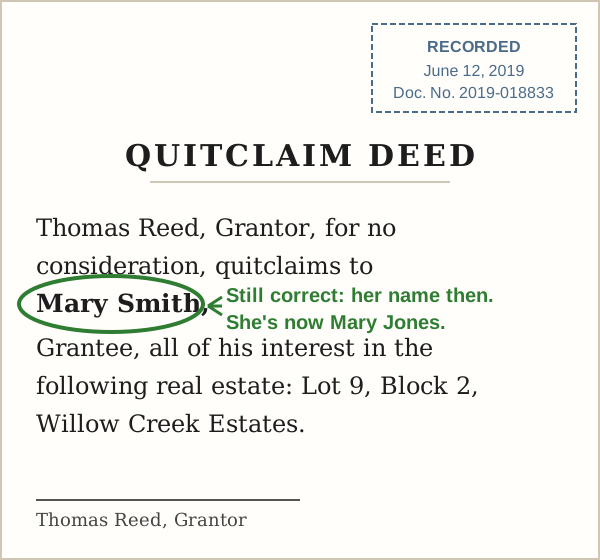
The recorded deed, 2019
Thomas Reed, Grantor, for no consideration, quitclaims to Mary Smith, Grantee, all of his interest in the following real estate:
Lot 9, Block 2, Willow Creek Estates, as shown on the recorded plat.
Recorded June 12, 2019, as Document No. 2019-018833.
Mary's quitclaim deed to herself
Mary Jones, who took title as Mary Smith, Grantor, for no consideration, quitclaims to Mary Jones, Grantee, all of her interest in the following real estate:
Lot 9, Block 2, Willow Creek Estates, as shown on the recorded plat.
This deed is given only to put the owner's current name on record. The owner took title by the deed recorded June 12, 2019, as Document No. 2019-018833. Nothing is paid for it.
What happens when I sell?
When you sell or give the property away, the deed you sign gives both names so the records connect you to the earlier deed, for example "Mary Smith, now known as Mary Jones." That phrase ties your current name to the name on record.
How do I put my new name on the record?
With a quitclaim deed from yourself to yourself. You're the grantor under the name on the recorded deed and the grantee under your current one. Nothing about your ownership changes; the deed only brings the record up to date.
- Order a copy of your recorded deed from the recording office in your property's county. Its legal description and recording details go into the new deed word for word.
- Prepare a quitclaim deed naming you as grantor "who took title as" your former name, and as grantee under your current name, with a line saying why it's given.
- Sign it in front of a notary, under your current name, with witnesses if your state requires them.
- Fill in any transfer tax return your state requires with a deed. Your state's guide covers it.
- Record the deed in the same county as the first.
If you'd also like to add your spouse to the title, that's a transfer to them rather than a name update. Adding a spouse to your deed explains how it works.
🛟 Need a little extra help? Our Quitclaim Deed Help page lists state-specific quitclaim deed forms, a deed preparation service and online notarization.
Common Questions
Is my deed still valid after I changed my name?
Yes. A deed records who owned the property when it was signed, under the name they used then. Your later name change doesn't undo it, and you remain the owner.
What name do I use when I sell?
Your current name, with the name on your recorded deed beside it, such as "Mary Smith, now known as Mary Jones." That links the sale to the deed that made you the owner.
Does a quitclaim deed to myself change who owns the property?
No. You're on both sides of it, so you own the property afterward exactly as you did before. It only puts your current name on record.
Where These Rules Come From
This page covers every state, so the laws below are examples, alongside the government pages behind the general points. Each citation, such as D.C. Code § 47-902, works like a street address for the law: which code, then which section. You don't need any of them to follow the page; they're here so you can check the wording yourself. Every name below links to its official text in a new tab.
- Dane County, Wisconsin, Register of Deeds: Change Married Name on Deed — a recording office explaining that a married name needs no action, giving the "now known as" wording for a later sale, and describing a quitclaim deed from yourself to yourself.
- Minn. Stat. § 500.19, subd. 4 — Minnesota's law that owners may convey an interest directly to one or more of themselves.
Rules on this page checked against the sources listed here on October 14, 2026.
A note on what this page is. This is general educational information, not legal advice, and reading it does not create an attorney-client relationship. Rules on fixing and re-recording deeds vary considerably by state and change over time. For advice about your specific situation, consult a qualified professional licensed in the state where the property is located.