How to Fix the Wrong Ownership Wording on a Deed
Last updated: October 14, 2026
When a deed says the owners hold the property one way and they meant another, such as joint tenancy instead of tenants in common, the fix is a quitclaim deed from the owners to themselves with the right wording. Everyone on the title signs it in front of a notary, and it's recorded in the county where the property is located. Because they own the property now, they can change how they hold it.
What's the difference between the two?
The wording decides what happens to an owner's share when that owner dies.
- Joint tenancy with right of survivorship: when one owner dies, their share goes to the surviving owners automatically.
- Tenants in common: there's no survivorship. Each owner's share stays theirs and doesn't pass to the other owners just because one of them dies.
Joint tenancy has to be spelled out. Washington's law, for example, says a deed creates one only if it expressly declares it, and Minnesota reads a deed to two or more people as tenants in common unless it says joint tenancy.
An example: joint tenancy where tenants in common was meant
Ana and Luis Ortiz, a sister and brother, received a property from their mother in 2022. They wanted each share to go to each one's own children someday, but the deed made them joint tenants with right of survivorship, so whichever of them lives longer would end up with all of it. Both are alive and agree, so the fix is a quitclaim deed from Ana and Luis to themselves as tenants in common.
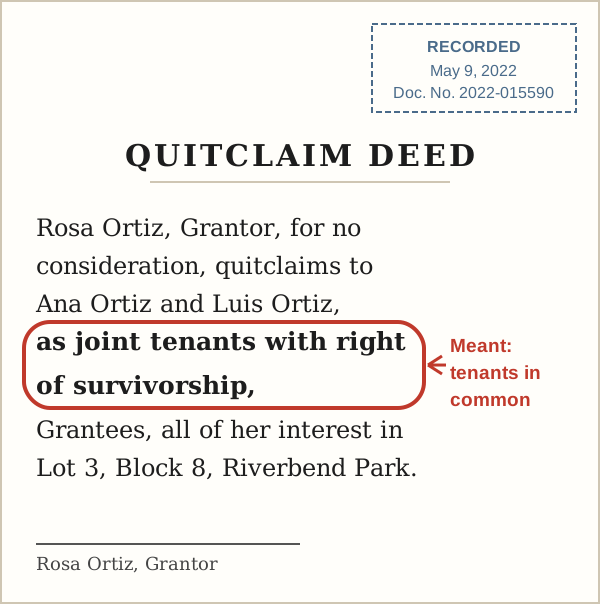
The recorded deed, 2022
Rosa Ortiz, Grantor, for no consideration, quitclaims to Ana Ortiz and Luis Ortiz, as joint tenants with right of survivorship, Grantees, all of her interest in the following real estate:
Lot 3, Block 8, Riverbend Park, as shown on the recorded plat.
Recorded May 9, 2022, as Document No. 2022-015590.
Ana and Luis's quitclaim deed to themselves
Ana Ortiz and Luis Ortiz, Grantors, for no consideration, quitclaim to Ana Ortiz and Luis Ortiz, as tenants in common, each as to an undivided one-half interest, Grantees, all of their interest in the following real estate:
Lot 3, Block 8, Riverbend Park, as shown on the recorded plat.
The Grantors took title by the deed recorded May 9, 2022, as Document No. 2022-015590. Nothing is paid for this deed.
Why do the owners sign, and not the person who gave them the property?
Once the first deed took effect, the property belonged to the people it named. The person who signed it has nothing left to pass, so the owners are the ones who can re-title it. They can deed the property to themselves with the wording they want: Minnesota's law says owners may convey directly to one or more of themselves, and Washington's names deeds from joint tenants or tenants in common to themselves.
Every owner signs, in front of a notary. If one owner signs alone, the result can differ from what everyone intended, and states set their own rules for that.
What if one owner has already died?
Then the wording has already done its work for that share, and it's a question of inheritance rather than a deed mistake. Getting an inherited property into your name covers what comes next.
Fixing the ownership wording, step by step
- Get a copy of the recorded deed from the recording office in the county where the property is located, and check exactly how it describes the owners.
- Prepare a quitclaim deed from all the owners to themselves, with the ownership wording you want written out in full, plus each owner's share if they aren't equal.
- Every owner signs in front of a notary, with witnesses if your state requires them.
- Fill in any transfer tax return your state requires. Whether this deed is taxed is a state question; the District of Columbia's exemption, for one, covers a transfer that modifies an earlier one without payment.
- Have it recorded in the county where the earlier deed is on record.
🛟 Need a little extra help? Our Quitclaim Deed Help page lists state-specific quitclaim deed forms, a deed preparation service and online notarization.
Common Questions
Can we change joint tenancy to tenants in common?
Yes. All the owners sign a quitclaim deed to themselves as tenants in common, in front of a notary, and record it in the county where the property is located.
What if our deed doesn't say either one?
Then state law decides. In Minnesota, for example, a deed to two or more people makes them tenants in common unless it expressly says joint tenancy. If that isn't what you meant, a quitclaim deed from all of you to yourselves puts the right wording on record.
Does the person who gave us the property have to sign?
Not for a quitclaim deed from the owners to themselves. The person who gave you the property no longer owns it; the people named as owners on the recorded deed sign.
Where These Rules Come From
This page covers every state, so the laws below are examples, alongside the government pages behind the general points. Each citation, such as D.C. Code § 47-902, works like a street address for the law: which code, then which section. You don't need any of them to follow the page; they're here so you can check the wording yourself. Every name below links to its official text in a new tab.
- Rev. Code Wash. § 64.28.010 — Washington's rules that a joint tenancy must be expressly declared in writing, can be created by a deed from joint tenants or tenants in common to themselves, and carries survivorship.
- Minn. Stat. § 500.19, subds. 2 and 4 — Minnesota reads a deed to two or more people as tenants in common unless it expressly declares joint tenancy, and lets owners convey directly to one or more of themselves.
- D.C. Code § 47-902(8) — the District exempts a transfer that confirms, corrects, modifies or supplements a recorded one, if nothing more is paid.
Rules on this page checked against the sources listed here on October 14, 2026.
A note on what this page is. This is general educational information, not legal advice, and reading it does not create an attorney-client relationship. Rules on fixing and re-recording deeds vary considerably by state and change over time. For advice about your specific situation, consult a qualified professional licensed in the state where the property is located.